Why Pacific Northwest Roofs Grow Moss So Fast (and How to Stop It)
If you live anywhere around Olympia, you've seen it: that fuzzy green carpet creeping across a neighbor's roof, the dark streaks running down north-facing shingles, the clumps of moss filling the gaps between tiles. Maybe it's on your own roof right now. Here in the Pacific Northwest, roof moss isn't a rare problem or a sign of neglect — it's practically a regional guarantee. Roofs here grow moss faster than almost anywhere else in the country, and most homeowners don't realize how quickly a little green tint turns into a moisture problem that shortens the life of their roof.
This guide explains exactly why our climate is a moss factory, what that growth is actually doing to your roof, and the real ways to stop it. After more than 200 roof jobs across Thurston, Mason, and Lewis counties, the crew at Dowers Power Wash has seen every stage of moss damage — from a faint green haze to roofs that needed thousands of dollars in repairs that a routine cleaning would have prevented.
Why Does Moss Grow So Fast on Pacific Northwest Roofs?
Moss thrives in the Pacific Northwest because our climate hands it everything it needs: constant moisture, abundant shade, mild temperatures, and a steady supply of airborne spores. Most of the country gets dry spells hot enough to kill moss back. Around Olympia, we rarely do — which is why local roofs grow it so aggressively and so consistently.
Moss isn't a plant with roots that drill into your roof. It's a primitive, rootless organism that absorbs water and nutrients directly through its surface. That means it doesn't need soil — it just needs a damp surface to cling to and enough moisture to keep it alive. A shaded asphalt or cedar roof in western Washington is almost a perfect habitat. Here's what makes our region uniquely hospitable.
Constant Moisture and Humidity
Olympia sees more than 50 inches of rain in a typical year, most of it spread across a long, gray wet season that runs from fall well into spring. That's not a few heavy storms — it's months of persistent dampness, drizzle, and humidity that never lets the roof fully dry out. Moss needs moisture to grow, and a PNW roof stays wet for far more of the year than roofs in drier climates. The longer a surface stays damp, the faster moss establishes itself.
Heavy Shade From Evergreens
Western Washington is covered in Douglas firs, cedars, and other evergreens that hold their needles year-round. Beautiful — but they cast permanent shade. Shaded roof sections never get the direct sunlight that would otherwise dry them out and bake back early moss growth. In tree-heavy Olympia neighborhoods like South Capitol and West Olympia, where mature evergreens tower over the rooflines, we routinely see roofs where the shaded north slope is choked with moss while the sunnier south slope is nearly clean. That contrast on a single roof tells you everything about how much shade matters.
Mild Year-Round Temperatures
Moss likes it cool but not frozen, and our climate obliges. The Pacific Northwest doesn't get the hard, sustained freezes or the blistering summer heat that knock moss back in other regions. Instead, we get mild, moderate temperatures most of the year — exactly the comfortable range moss prefers. There's no seasonal die-off to reset the clock, so growth that starts in fall just keeps compounding.
A Constant Supply of Spores and Organic Debris
All those evergreens drop needles, leaves, twigs, and organic grit onto your roof continuously. That debris collects in valleys and along the bottom edges of shingles, holds moisture like a sponge, and creates a nutrient-rich bed for moss and algae to colonize. Combine airborne moss spores (which are everywhere in a forested region) with a damp, debris-littered surface, and colonization is only a matter of time.
Is Moss Actually Damaging My Roof, or Just Ugly?
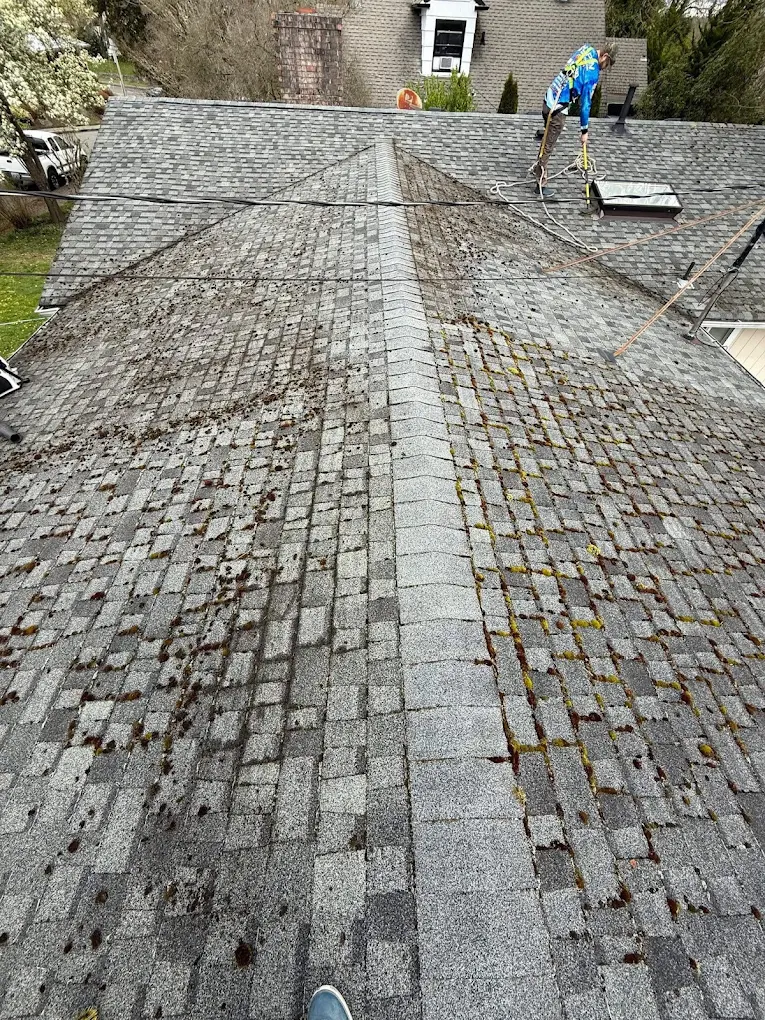
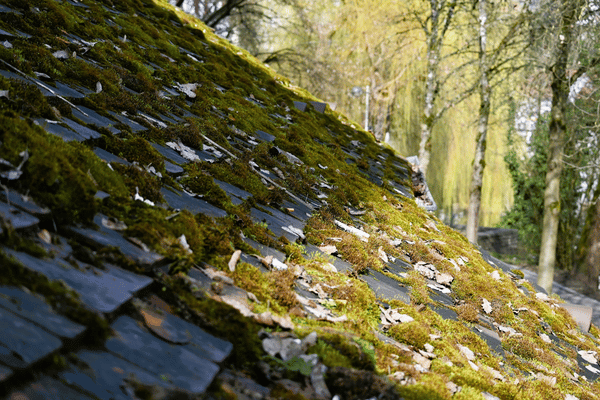
Moss does real structural damage — it's not only a curb-appeal problem. As it grows, moss lifts and separates shingles, traps water against the roof surface, and holds that moisture in place around the clock, which leads to rot, leaks, and premature roof failure. The green fuzz is the visible symptom; the damage is happening underneath it.
Here's the mechanism. As moss thickens, it wedges itself under the bottom edges of shingles and slowly lifts them. Lifted shingles break the roof's water-shedding design and let wind and rain get underneath. At the same time, the moss mat acts like a wet blanket, holding moisture directly against the roofing material instead of letting it run off and dry. On asphalt shingles, that constant dampness accelerates the breakdown of the protective granule layer. On cedar shakes, trapped moisture leads straight to rot. In roof valleys, moss and debris dam up the flow of water and redirect it into places it was never meant to go — which is how interior leaks and water-stained ceilings start.
Left alone, a moss problem doesn't plateau. It compounds. A roof that might have lasted another 15 years can lose a third of its lifespan to unchecked organic growth. The frustrating part, from where we stand, is that nearly all of it is preventable. The homeowners who call us for emergency leak issues are almost always the ones whose roofs went years without a cleaning — while the ones on a simple maintenance schedule rarely see damage at all.
What Are Those Black Streaks — Is That Moss Too?
Those dark streaks running down your roof usually aren't moss — they're a blue-green algae called Gloeocapsa magma, and they thrive in the same damp, shaded PNW conditions. Algae shows up as flat black or dark-green staining, while moss is the raised, green, three-dimensional growth. Many Olympia-area roofs have both at once.
The distinction matters because they're addressed a little differently, but the underlying cause is identical: too much moisture, too little sun. If you're seeing dark streaks and green clumps, your roof is telling you its surface stays wet long enough to host multiple organisms. That's a signal to act before the moss thickens enough to start lifting shingles.
How Do You Actually Stop Moss From Growing on a PNW Roof?
The only reliable way to stop moss on a Pacific Northwest roof is professional soft washing combined with routine maintenance — not high-pressure blasting, and not one-and-done DIY treatments. Soft washing uses low pressure and specialized, eco-friendly cleaning solutions to kill and remove moss and algae at the source without damaging the roof, and the right maintenance rhythm keeps it from coming back.
Let's break down what works, what doesn't, and why.
Why Soft Washing Is the Right Method
Roofing materials simply can't withstand aggressive pressure. A standard pressure washer aimed at shingles strips away the protective granules, voids many manufacturer warranties, and can drive water up under the shingles — often causing more damage than the moss itself. This is the single most common DIY mistake we get called to fix.
Soft washing solves that. It pairs gentle, low-pressure water with biodegradable cleaning agents that break down moss and algae biologically rather than blasting them off mechanically. The solution does the work, so the roof surface stays intact. At Dowers Power Wash, our soft-wash approach is built specifically for the cedar shingles, asphalt roofs, and tile you'll find on homes throughout the Olympia area — and because the eco-friendly solutions keep working after application, they slow regrowth instead of just clearing the surface for a few weeks. You can see how this fits into our full roof cleaning services and the soft-washing process we use on every job.
Why DIY Usually Backfires
We understand the temptation to handle it yourself, but roof work is where DIY goes wrong fast — and not just because of the pressure-washing damage. Getting on a wet, moss-slick PNW roof is genuinely dangerous, the bleach-heavy mixes sold at hardware stores can damage landscaping and don't address the underlying conditions, and most homeowners can't safely reach or properly treat the shaded north-facing slopes where moss is worst. A botched DIY job often costs more to fix than a professional cleaning would have cost in the first place. This is exactly the kind of work where bringing in a licensed, insured crew pays for itself.
Why Routine Maintenance Is the Real Solution
Here's the truth most homeowners don't hear: a single cleaning isn't a cure, because our climate never stops feeding the problem. The roofs that stay moss-free are the ones on a maintenance schedule. For most Olympia-area homes, we recommend a professional cleaning every one to two years, with the exact interval depending on how much tree cover and shade your roof has. A heavily shaded roof under evergreens may need more frequent attention; a sunnier, more exposed roof less. Pairing cleaning with preventative treatments and keeping debris cleared from valleys and gutters dramatically slows how fast moss re-establishes.
Don't Forget the Gutters and Debris
Moss and roof health are tied directly to drainage. Clogged gutters and valleys packed with needles and leaves trap water against the roof and create the exact damp, organic conditions moss loves. Keeping gutters clear and debris off the roof is one of the cheapest, highest-impact things you can do between cleanings — which is why we often handle gutter cleaning and roof care together as part of regular property maintenance.
When Should Olympia Homeowners Schedule Moss Removal?
The best time to remove moss in our region is during the drier stretch from late spring through summer, before the fall rains return and feed a new growth cycle. Cleaning a roof while it's dry and accessible sets it up to head into the wet season clean, which slows how much moss can establish over winter.
That said, if your roof already has heavy moss, the best time to deal with it is now — waiting only lets it thicken, lift more shingles, and trap more moisture. Summer is ideal for getting ahead of the problem; any time is right for stopping active damage. If you're not sure how far along your roof is, that's exactly what a professional assessment is for.
Protecting Your Investment in a Moss-Prone Climate
Your roof is one of the most expensive components of your home, and in the Pacific Northwest it's under constant biological assault that homeowners in drier regions never have to think about. The good news is that moss is manageable — even easy to stay ahead of — once you understand what's driving it and commit to keeping the roof clean and well-drained. Routine professional care costs a small fraction of a roof replacement, and it protects not just the roof but everything underneath it.
Whether you're maintaining a longtime family home or getting a property ready to sell (where a moss-covered roof is an instant red flag for inspectors and buyers), keeping your roof clean pays off in protection, curb appeal, and peace of mind. The team at Dowers Power Wash has built its reputation on exactly this kind of work across Thurston County — backed by more than 212 five-star reviews, same-day response, and a licensed, insured, veteran-owned crew that treats your property like its own. If your roof is showing green, reach out for a free estimate and we'll tell you honestly where it stands.

1. How fast does moss actually grow on roofs in the Olympia area? Faster than most people expect. In our wet, shaded climate, a faint green tint can become an established moss mat within a year or two, especially on north-facing or tree-shaded slopes. Because the Pacific Northwest rarely gets the dry heat or hard freezes that kill moss back elsewhere, growth that starts in fall just keeps compounding through the mild, damp months. That's why local roofs need attention far more often than roofs in drier regions.
2. Is moss on my roof actually a problem, or is it just cosmetic? It's a real problem, not just an eyesore. As moss grows it lifts and separates shingles, traps moisture against the roof surface, and can dam up water in valleys — leading to rot, leaks, and a shortened roof lifespan. The green you see on top is the warning sign; the damage happens underneath. The sooner it's addressed, the less it costs you down the road.
3. Why can't I just pressure wash the moss off myself? Standard high-pressure washing is one of the worst things you can do to a roof. It strips the protective granules off asphalt shingles, can void your manufacturer's warranty, and may force water up under the shingles — often causing more damage than the moss. Roofing materials need a low-pressure soft-wash approach with proper cleaning solutions, not aggressive blasting. Add in the real danger of working on a wet, slick roof, and DIY usually costs more than it saves.
4. What is soft washing, and why is it better for roofs? Soft washing is a low-pressure cleaning method that combines gentle water pressure with specialized, eco-friendly cleaning solutions to safely kill and remove moss, algae, and organic stains. Because the solution does the work biologically instead of relying on force, it cleans cedar shingles, asphalt, and tile without damaging them or voiding warranties. It's the method Dowers Power Wash uses on every roof, and it's the standard professionals rely on for moss-prone PNW roofs.
5. How often should I have my roof cleaned in Western Washington? For most Olympia-area homes, every one to two years is the sweet spot, though the right interval depends on your roof. Heavily shaded roofs under evergreens may need more frequent cleaning, while sunnier, more exposed roofs can go a bit longer. Because our climate constantly feeds moss growth, a maintenance schedule — rather than waiting for a visible problem — is what actually keeps a roof clean long-term.

6. What are the dark streaks on my roof — are they moss? Those black or dark-green streaks usually aren't moss; they're a blue-green algae called Gloeocapsa magma that thrives in the same damp, shaded conditions. Algae appears as flat staining, while moss is the raised, fuzzy green growth. Many PNW roofs have both. Both are removed with professional soft washing, and both are signs your roof surface is staying wet long enough to host organic growth.
7. Will roof cleaning damage my shingles or void my warranty? Not when it's done correctly. Professional soft washing uses low pressure and roof-safe solutions specifically to avoid the damage that high-pressure washing causes. Improper DIY pressure washing, on the other hand, absolutely can strip granules and void warranties. Hiring a licensed, insured crew that uses the right method protects both your roof and your warranty coverage.
8. Can moss really come back after it's cleaned? Yes — in our climate, regrowth is normal because the moisture, shade, and mild temperatures that caused it never go away. That's why a one-time cleaning isn't a permanent fix. The eco-friendly solutions used in professional soft washing keep working after application to slow regrowth, and pairing cleaning with routine maintenance and clear gutters is what keeps moss from re-establishing quickly.
9. Does moss on the roof affect anything besides the roof itself? It can. Trapped moisture and clogged, moss-fed valleys can redirect water into places it shouldn't go, contributing to interior leaks, water-stained ceilings, and fascia or gutter problems. A moss-covered roof also drags down curb appeal and raises red flags during home inspections and sales. Keeping the roof clean protects the whole system — roof, gutters, and the structure underneath.
10. How do I know if my roof needs cleaning now or can wait? If you can see green clumps, dark streaks, or debris building up in the valleys, it's worth getting an assessment — those are signs organic growth is already established. The safest approach is a professional evaluation of your roof's condition, material, and the extent of moss or algae, which determines whether you need immediate cleaning or can schedule preventative maintenance. Dowers Power Wash offers free estimates, so it costs nothing to find out where your roof stands.
Dowers Power Wash LLC is a veteran-owned, family-operated exterior cleaning company serving Olympia, Lacey, Tumwater, Yelm, Centralia, Shelton, and the surrounding Thurston, Mason, and Lewis County communities. Services include roof cleaning, moss treatment and removal, house washing, gutter cleaning, pressure washing, and more — all backed by 212+ five-star reviews and same-day response. Call (360) 915-2493 for a free estimate.
